Knowledge Products
Access our latest publications, insights, and thought leadership on humanitarian response, development programming, and innovation in complex contexts.
Publications & Reports
Featured
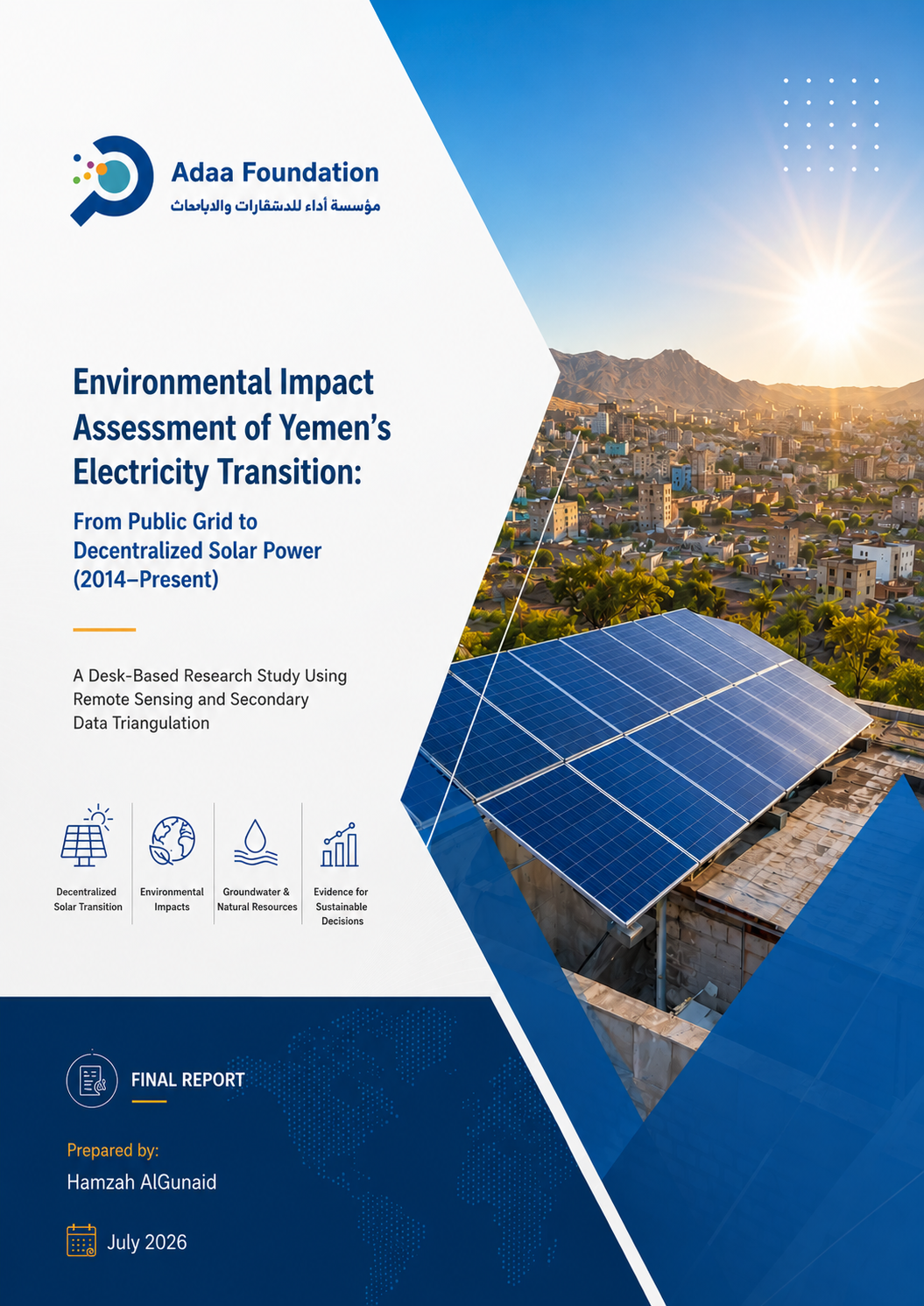
Environmental Impact Assessment of Yemen’s Electricity Transition: From Public Grid to Decentralized Solar Power (2014–Present)
A twelve-year desk-based environmental assessment examining Yemen’s transition from public-grid electricity to decentralized solar power using satellite remote sensing and secondary-data triangulation.
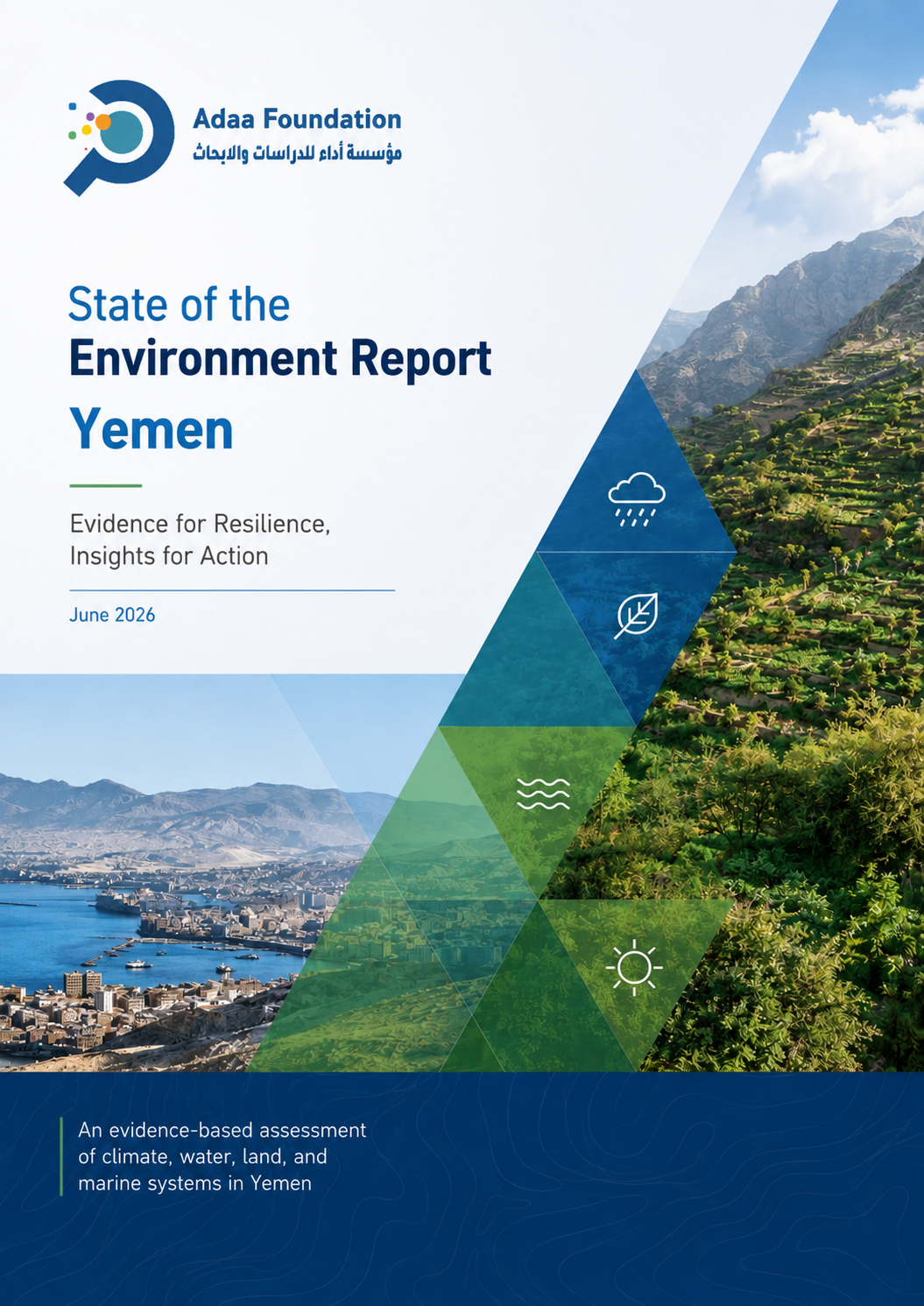
State of the Environment Report – Yemen 2026
A comprehensive assessment of Yemen's environmental and climate conditions, combining international evidence with Adaa Foundation's original satellite-based analysis to provide actionable insights for resilience, environmental governance, and sustainable development.
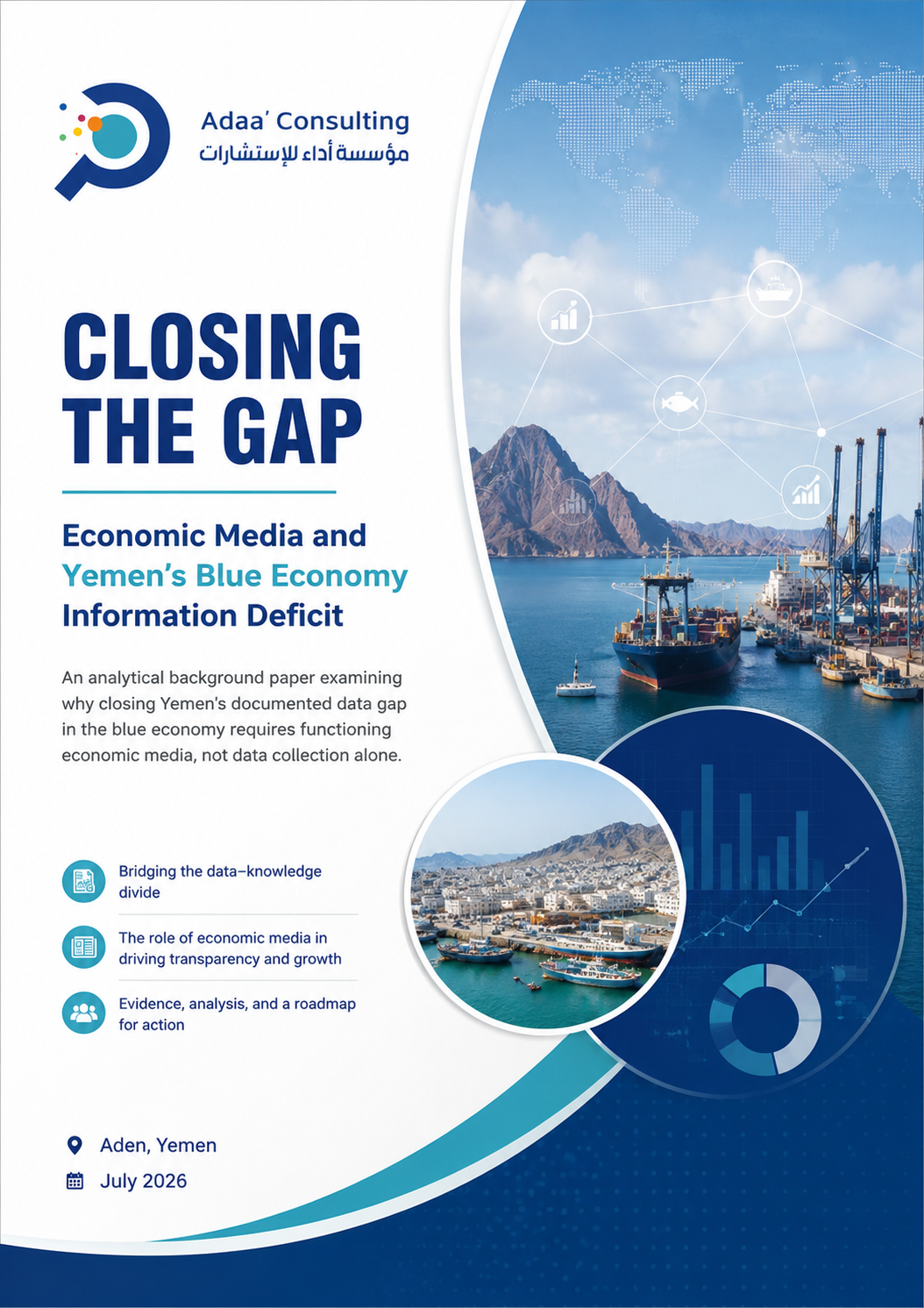
Closing the Gap: Economic Media and Yemen's Blue Economy Information Deficit
Closing the Gap: Economic Media and Yemen's Blue Economy Information Deficit examines why Yemen's blue economy information gap cannot be solved by data collection alone. The paper argues that the country's greatest challenge lies in the absence of a strong economic media ecosystem capable of transforming existing data into accessible knowledge for policymakers, businesses, and the public. Through international benchmarking and evidence-based analysis, it proposes a practical roadmap to strengthen economic journalism and improve evidence-informed decision-making.
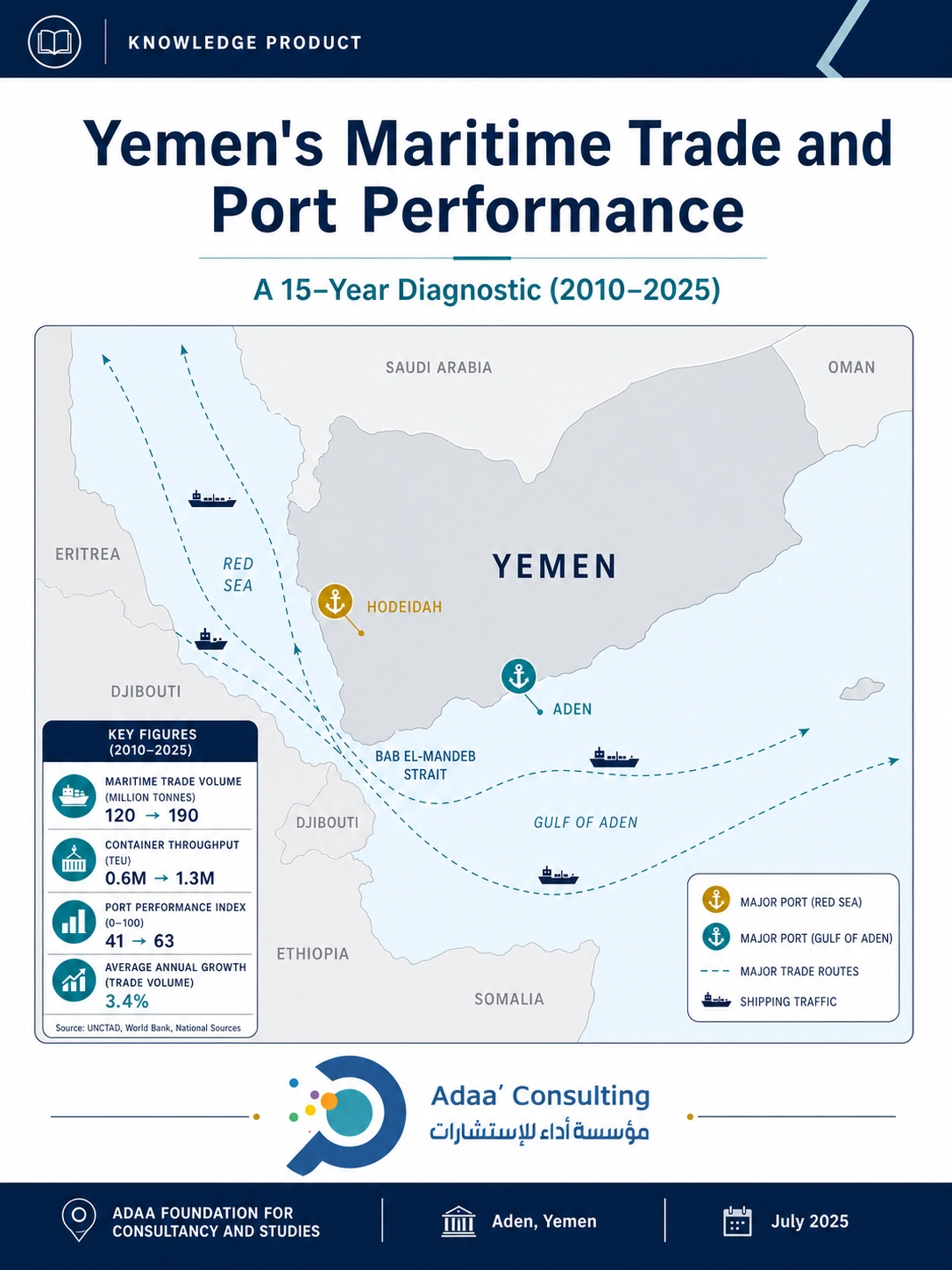
Yemen's Maritime Trade and Port Performance: 2021-2025 Diagnostic Period
Yemen Maritime Trade and Port Performance Diagnostic (2010–2025) examines how conflict, institutional fragmentation, and regional security disruptions have reshaped Yemen's maritime trade and port sector. The report introduces a dual-index framework that distinguishes between physical port activity and fiscal performance, revealing that trade volumes can recover while government revenue continues to decline. Drawing on national and international evidence, it provides practical recommendations to strengthen port governance, customs harmonization, and evidence-based maritime policy.
All Publications
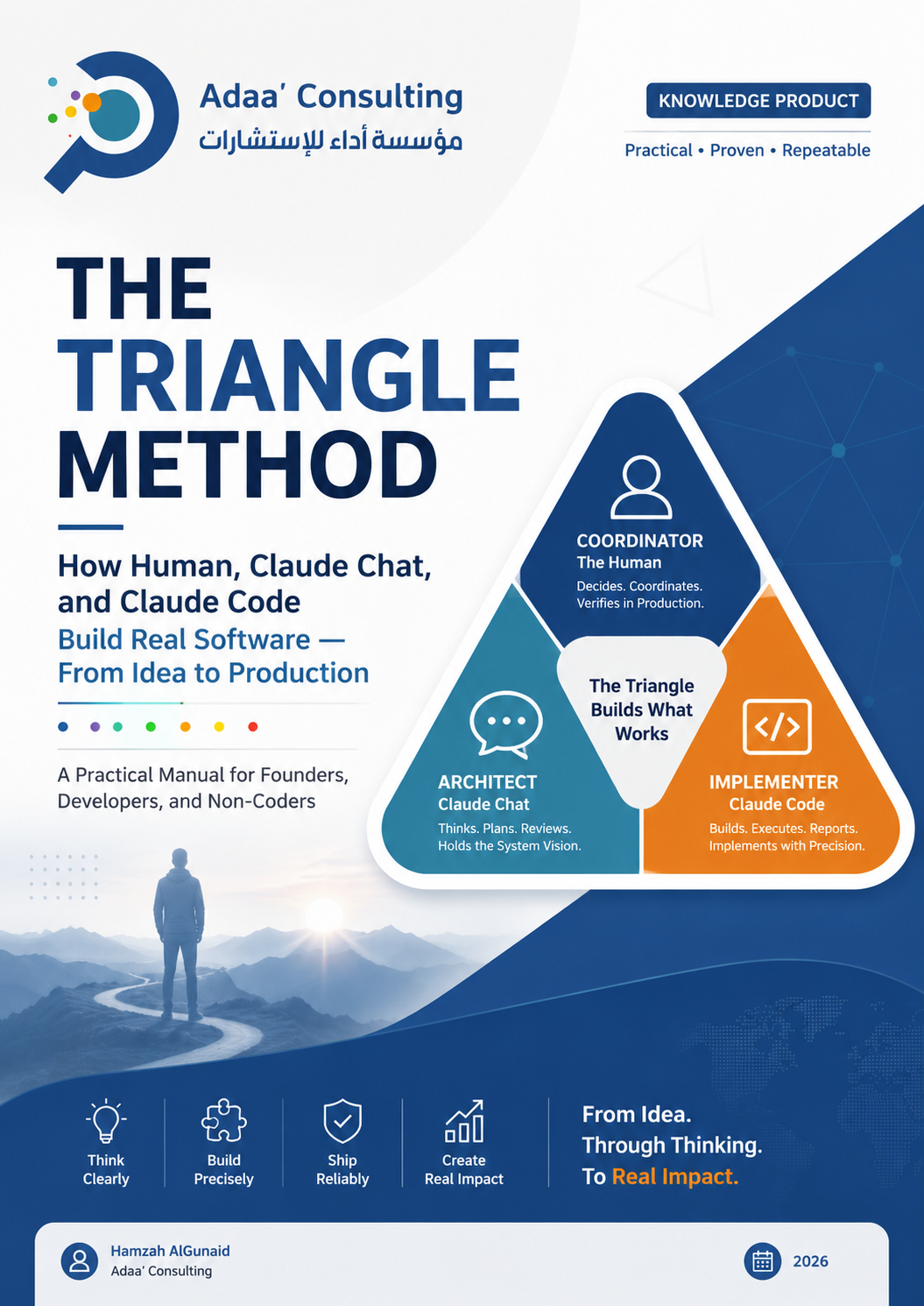
The Triangle Method: How Human, Claude Chat, and Claude Code Build Real Software — From Idea to Production
Adaa Consulting releases The Triangle Method, a practical manual by Hamzah AlGunaid documenting a disciplined three-role framework — Human as Coordinator, Claude Chat as Architect, Claude Code as Implementer — for building production software with AI assistance. Developed through the construction of a real production platform, the manual rejects the "one-prompt app" premise sold by many AI coding platforms, arguing that the gap between a demo and real software is architectural and product thinking, not prompt volume. It covers specification design, shared memory across sessions, precise implementation briefs, production diagnosis, and deployment discipline — written for founders, developers, and non-coders alike.
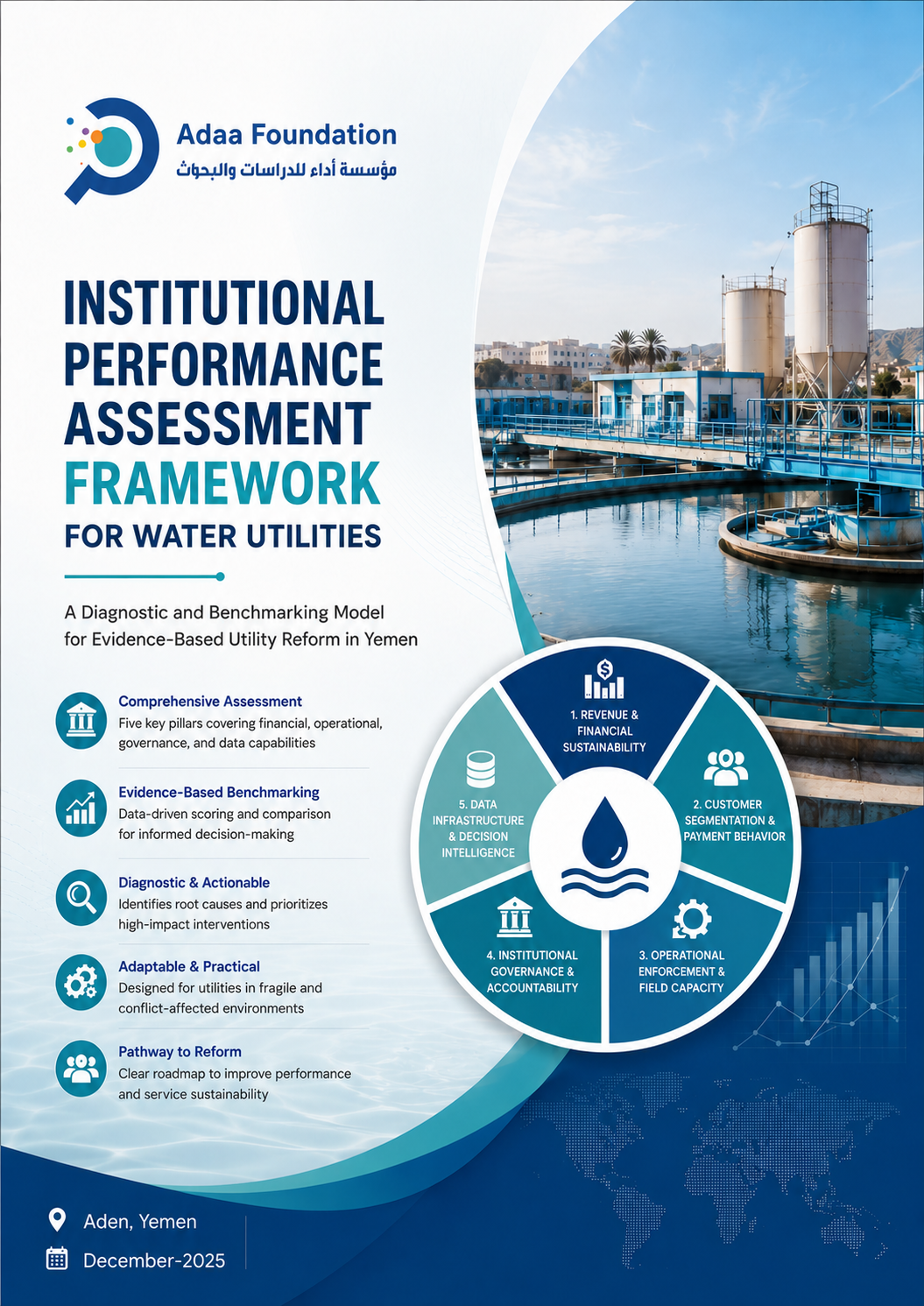
Institutional Performance Assessment Framework for Water Utilities in Yemen
A practical diagnostic and benchmarking framework designed to assess institutional revenue performance of water utilities in Yemen through evidence-based analysis, maturity assessment, and actionable reform pathways.
Digital Transformation in Humanitarian Response: Lessons from Yemen
Analysis of practical approaches to implementing digital solutions in low-bandwidth resource-constrained humanitarian contexts.
Revenue Performance Diagnostic Study: Root Cause Analysis and Recovery Pathway for LWSCA
Adaa' Foundation for Consultancy and Studies is pleased to release its Revenue Performance Diagnostic Study for the Local Water and Sanitation Corporation Authority – Aden (LWSCA), commissioned to establish an evidence base for the utility's financial recovery. Drawing on 102 months of billing data, the diagnostic converts LWSCA's revenue crisis into a clear investment case: which parts are structural, and which are reversible through targeted action. It separates governmental non-payment and tariff-driven affordability stress from fixable operational failures — a rigid auto-suspension policy and collapsed field enforcement — and sequences four interventions capable of lifting collection efficiency from 33.9% to 46-49% within 18 months. Projected return: 43:1 on an estimated 20 million YER investment. For donors, it offers a transparent, monitorable case for capacity funding; for LWSCA leadership, a prioritized action plan; for the Ministry of Water & Environment, a replicable model for utility reform across Yemen.
Can't find what you're looking for?
Our team is available to discuss specific research needs, custom analysis, or potential collaboration on knowledge products.